
Our models:
advantages and silk properties
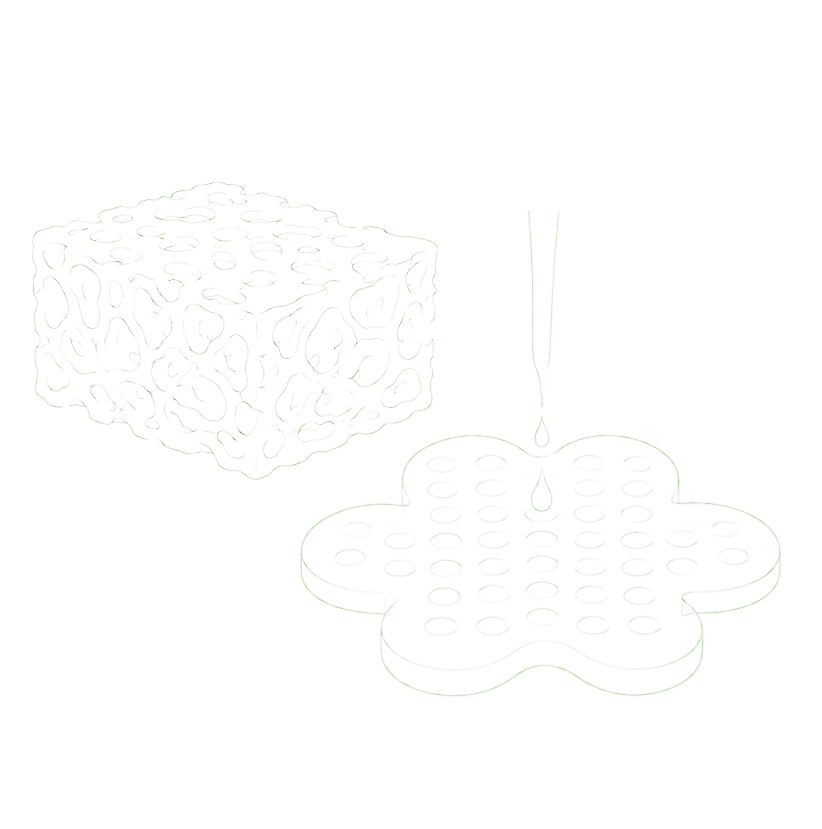
Silk4B’s patented in vitro silk-based 3D bone marrow models faithfully reproduce the properties of the in vivo bone marrow niche. The models enable in vitro studies with high translational relevance to human biology, while offering ease-of-use, scale, and cost-effectiveness.
Home › Our models: Advantages & Silk Properties
The Silk4B 3D bone marrow models reproduce the architecture, mechanics and biochemical signalling of the human niche.
Silk4B's models are the first to reproduce both the biology and the mechanics of the bone marrow in vitro. They are built on silk fibroin, a purified biocompatible protein.
The material behind the model
Silk fibroin is a purified, well-defined protein with a combination of properties that makes it well-suited to modelling bone marrow as a whole, rather than any single lineage within it.
It can be processed across a broad, tunable stiffness range, including values that match healthy human marrow. This is what allows the model to reproduce the mechanical cues that shape hematopoiesis. Silk fibroin is also well tolerated by the range of cell types the marrow niche contains, from HSPCs to stromal and vascular cells, supporting long-term culture without the material itself confounding the biology.
Together, these properties make it possible to build a single platform that supports the full range of marrow biology: HSPC maintenance, multi-lineage differentiation, stromal and vascular co-culture, and disease modelling.
Mechanics that match Human Marrow
The marrow microenvironment regulates hematopoiesis through matrix stiffness and structure, not biochemistry alone. Take HSPCs out of that mechanical context and they behave differently, losing stemness and narrowing their differentiation potential.
Silk4B's softer formulations sit within the stiffness range reported for healthy human marrow, 0.1 to 10 kPa by AFM. This isn't just for HSPC maintenance: other marrow cells depend on it too. Megakaryocytes use mechanosensors to read matrix stiffness and adjust their behaviour accordingly. On soft silk, megakaryocytes extend long, branched proplatelets; as stiffness rises, proplatelet formation declines.
Because stiffness is tuneable, the same platform can reproduce the mechanical progression from healthy marrow through early and late fibrosis, letting researchers isolate whether a phenotype comes from the cells themselves or from the matrix around them.
One Model, Any Level of Complexity
The model scales to fit the question you're asking. Use a single cell type for high-throughput screening or to dissect a specific pathway, such as platelet formation or erythropoiesis. Add a second cell type, such as megakaryocytes with neutrophils, to study how two populations interact. Or build a three-plus cell system, such as HSPCs with megakaryocytes, endothelial cells, and stromal cells, to recreate more of the niche at once. This flexibility makes it possible to isolate the contribution of individual cell types and cell-cell interactions in both normal and diseased states.
Functional Cells
Silk4B models mimic the properties of in vivo bone marrow, supporting successful differentiation into mature cells as well as enhanced preservation and functional incorporation of progenitor cells collected from patients or animal models.
Platelets released from megakaryocytes in the niche pass activation, adhesion, aggregation, and clot-participation testing.
Red blood cells are produced fully enucleated, the point where most ex vivo systems stop.
Neutrophils introduced from peripheral blood survive better than in standard pellet-based preservation, remain functional, and boost platelet production.
A Model That Predicts, Not Just Describes
Because Silk4B models reproduce the mechanical and biochemical environment cells actually respond to, drug response measured in the model tracks what happens in the clinic. In one validated example, platelet output measured in the model correctly identified which thrombocytopenia patients would go on to respond to treatment, demonstrating that the platform can be used to predict clinical drug response, not just describe cell behaviour in a dish. The same system works with patient peripheral blood progenitors and with iPSC-derived cells, making it applicable across a range of disease and drug-testing programmes.
Disease, Built to Order
Silk4B models aren't limited to healthy physiology: they can be pushed to reproduce disease states. Matrix and cellular composition can be adjusted to mimic fibrotic, malignant, or otherwise pathological marrow, letting researchers study disease progression and test candidate drugs in a setting that behaves like real marrow rather than a simplified stand-in.
Malignant or patient-derived cells can be incorporated in any configuration: a fully diseased bone-marrow niche, or a single diseased cell type set against a healthy-donor niche, making the platform suited to both mechanistic disease research and target identification for drug discovery.
Standardised and validated
The underlying culture protocols were established across thousands of blood samples and published as a reference standard for the field. Step-by-step protocols for 3D culture, differentiation, and blood cell production are already published; adoption doesn't mean building an assay from scratch.
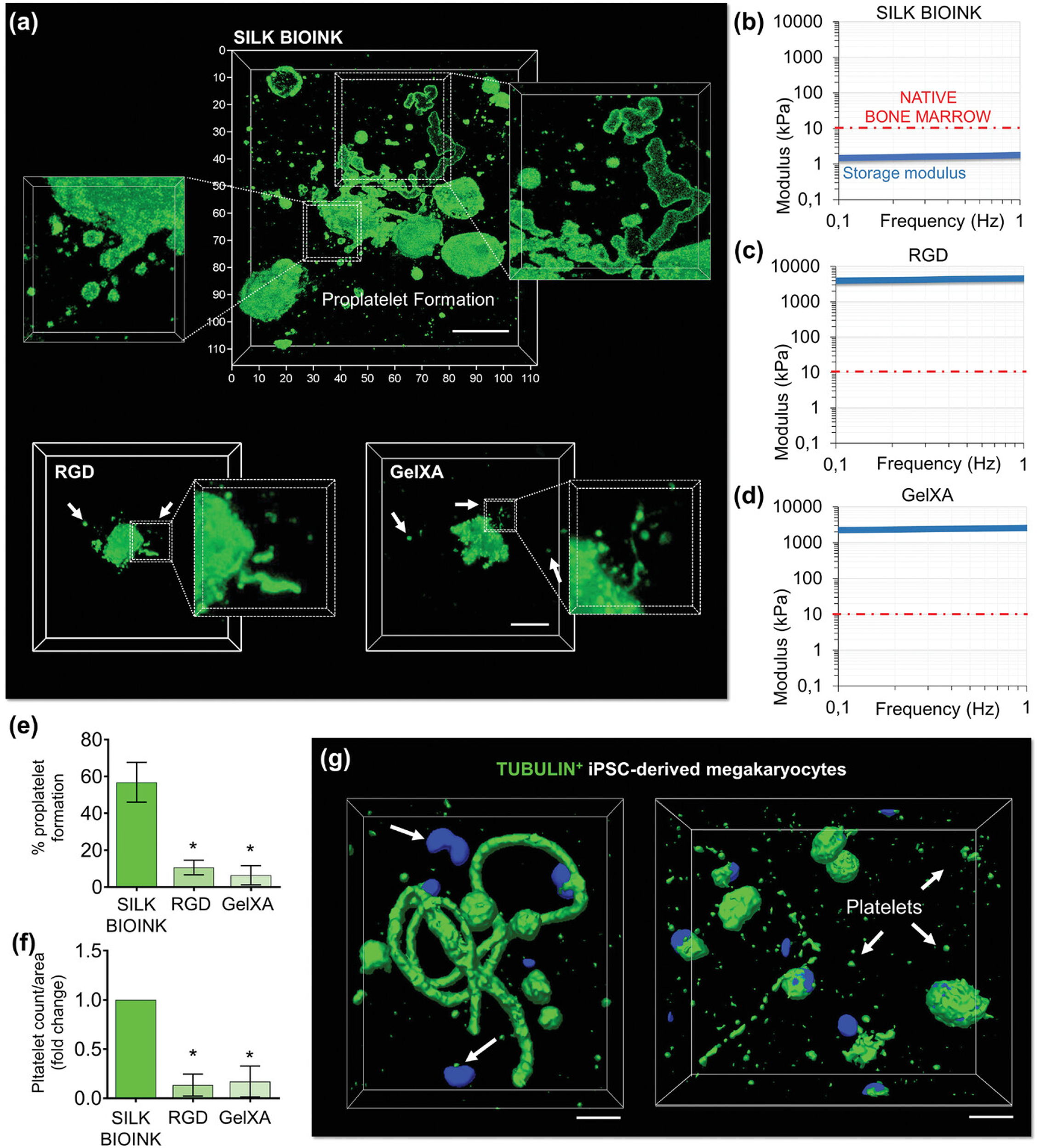
The unique softness of 3D bioprinted silk‐bioink is crucial to support thrombopoiesis. 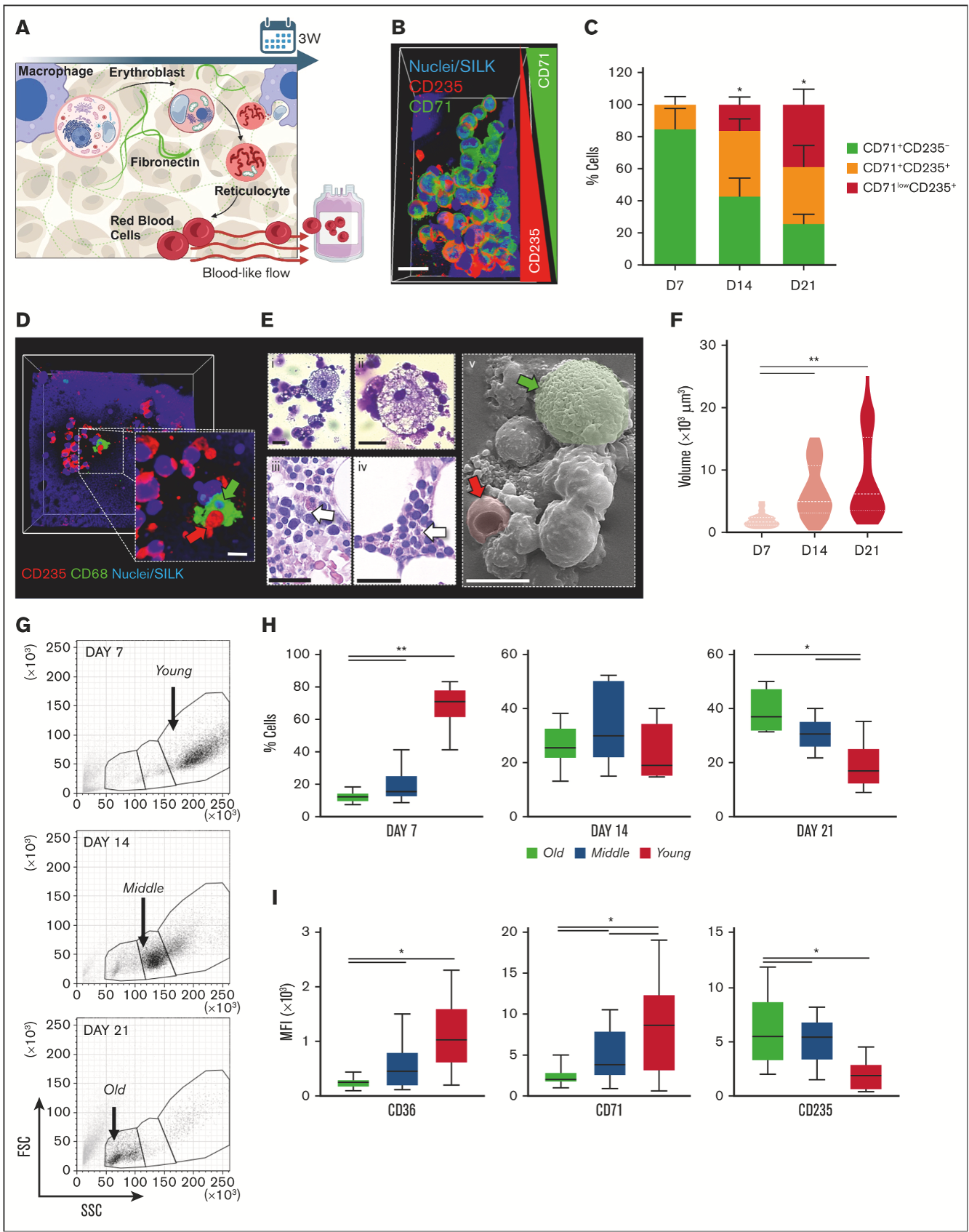
Development of EBI-like niches inside the silk bone marrow model. Biomaterials - 2017
Modular flow chamber for engineering bone marrow architecture and function
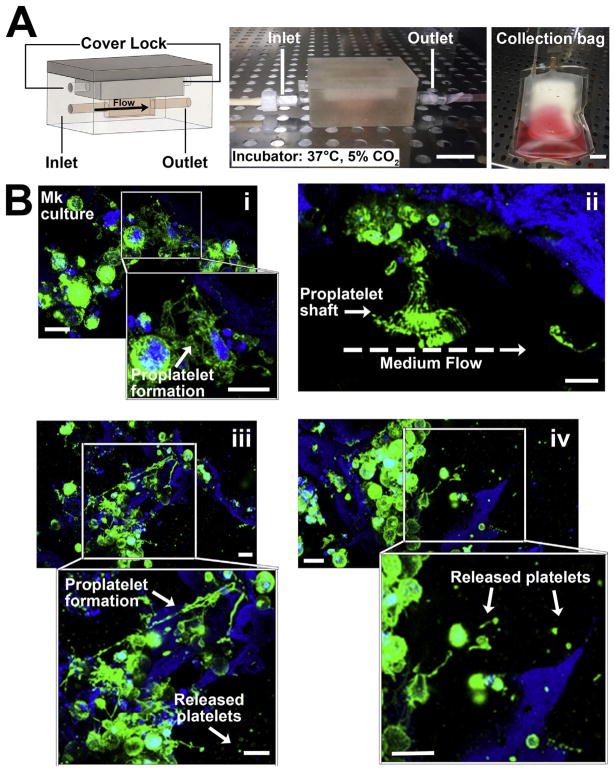
Flow chamber perfusion and ex vivo produced platelets recovery.Silk Properties
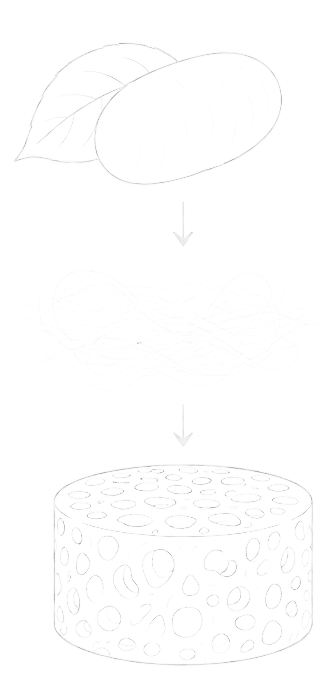
All of this is possible due to our patented approach of using Silk Fibroin as a fundamental material in our 3D bone marrow models. Silk Fibroin has unique properties that make it suitable for fundamental and disease relevant research as well as medicine.
Tunable stiffness: Silk Fibroin has the unique property that it can be processed to create different physical stiffness levels for our 3D bone marrow models. The very soft versions (SilkInk, SilkThemo, SilkFold) are the only in vitro models in research that are matching the healthy bone marrow structure. Stiffer models (SilkTune with its tunable stiffness) allow to match the stiffness of diseased bone marrow structures. This makes our models unique in their ability to allow dissecting the physical effects of the bone marrow environment and disease progression.
Biocompatible: Silk Fibroin is a highly biocompatible material known for its low immunogenicity, non-thrombogenic properties, acellular and no xenogenic risk. This makes it suitable for work with delicate cells and even patients.
3D architecture: Silk Fibroin helps maintain the 3D architecture in our models allowing for proper cell-matrix and cell-cell interactions
Molecular biocompatibility: Silk Fibroin allows for delivery of molecules to the cells (cytokines, growth factors, other). This is an essential property that allows the necessary molecules to reach the cells for their survival, proliferation and differentiation in our 3D models.
Optical transparency: Silk Fibroin is highly transparent optically, which makes it suitable for microscopy, including live imaging.
Formats
Our models come as hydrogels or scaffolds. Both place cells in a matrix with the stiffness and three-dimensional organisation of native marrow. Hydrogels scale, from single experiments to automated high-throughput workflows. Scaffolds hold complexity, including multiple cell types co-culture, sequential multi-cell seeding and perfusion.
Hydrogels
Supplied as a liquid. Cells are mixed in directly at 37 °C, extruded into the required shape, and stabilised by cross-linking under physiological conditions.
Media components, drugs and cytokines distribute freely through the matrix, and cells are recovered intact at the end of the experiment with a retrieval solution that dissolves the matrix gently, leaving them available for flow cytometry, functional assays, RNA sequencing, proteomics and biochemistry.
All formats are viscoelastic, shear-thinning and thixotropic, recovering rapidly after extrusion and remaining stable through long-term culture. They also are optically transparent, permitting high-resolution live imaging of differentiation inside the construct.
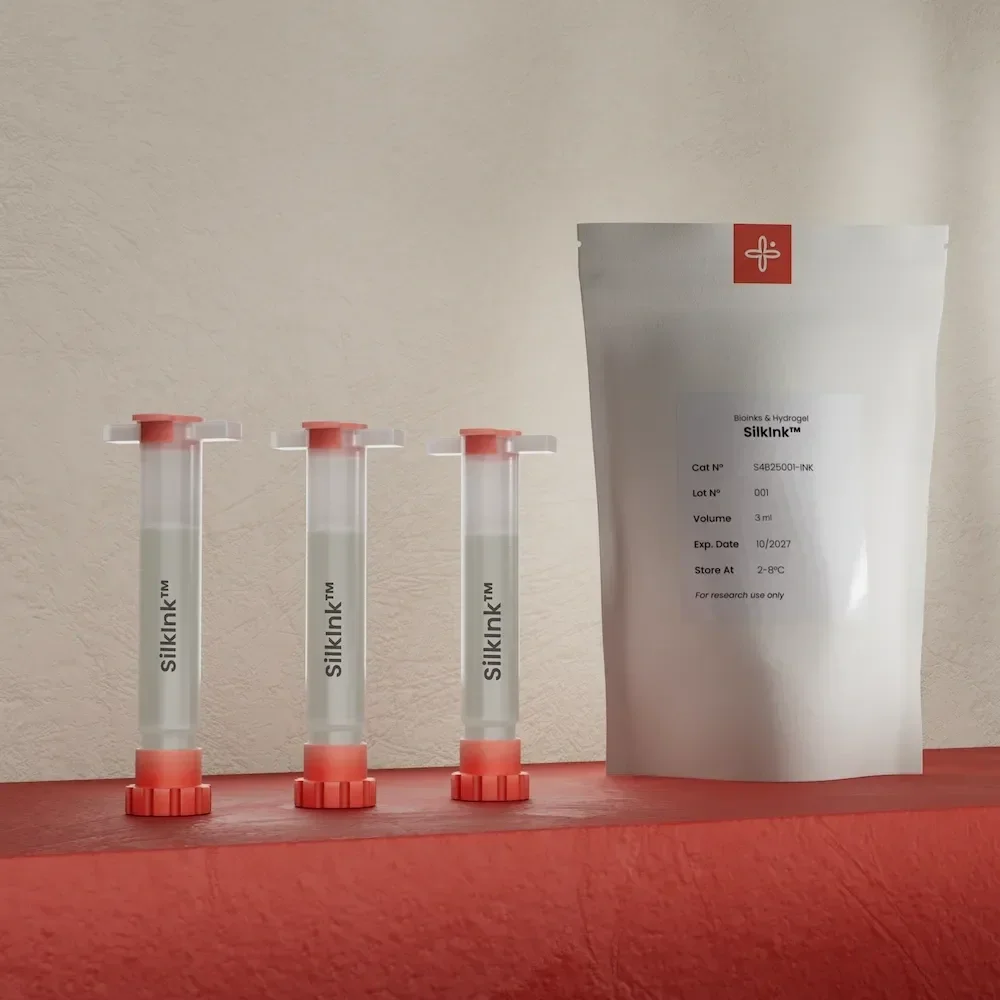
SilkInk™ is a bioink for 3D bioprinting and culturing bone marrow cells, mimicking the 3D tissue environment.
Available formulations: 1ml, 2ml, 3ml
SilkInk™ is the bioprintable formulation that produces constructs of programmable shape, volume and cell number on standard bioprinters. Validated for differentiation of hematopoietic stem and progenitor cells to platelets and red cells in bioprinted constructs.
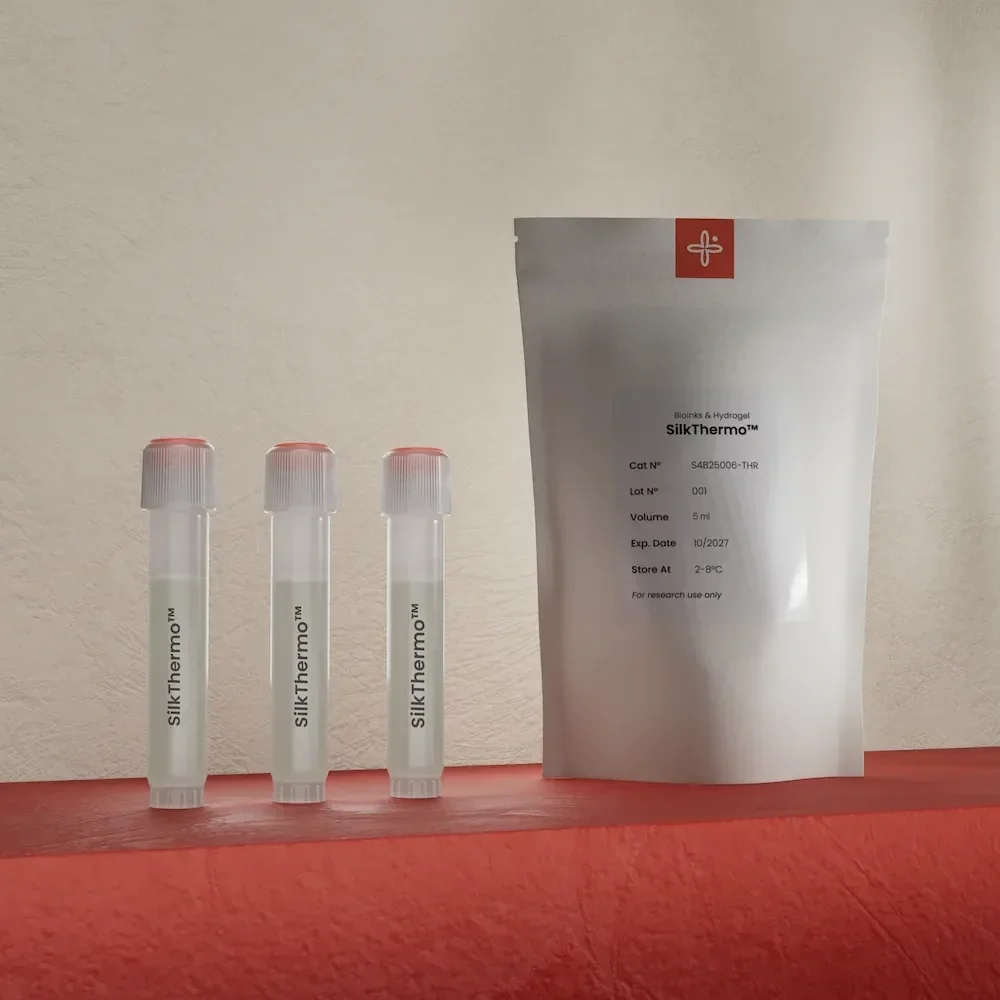
SilkThermo™ is a ready-to-use hydrogel developed to mimic the 3D tissue environment of bone marrow that can be cast without a bioprinter or specialized instrumentation.
Available formulations: 5 ml
SilkThermo™ has the same composition and properties as SilkInk™, adapted for manual extrusion into supplied moulds.
For laboratories without bioprinter access or work that does not require high throughput
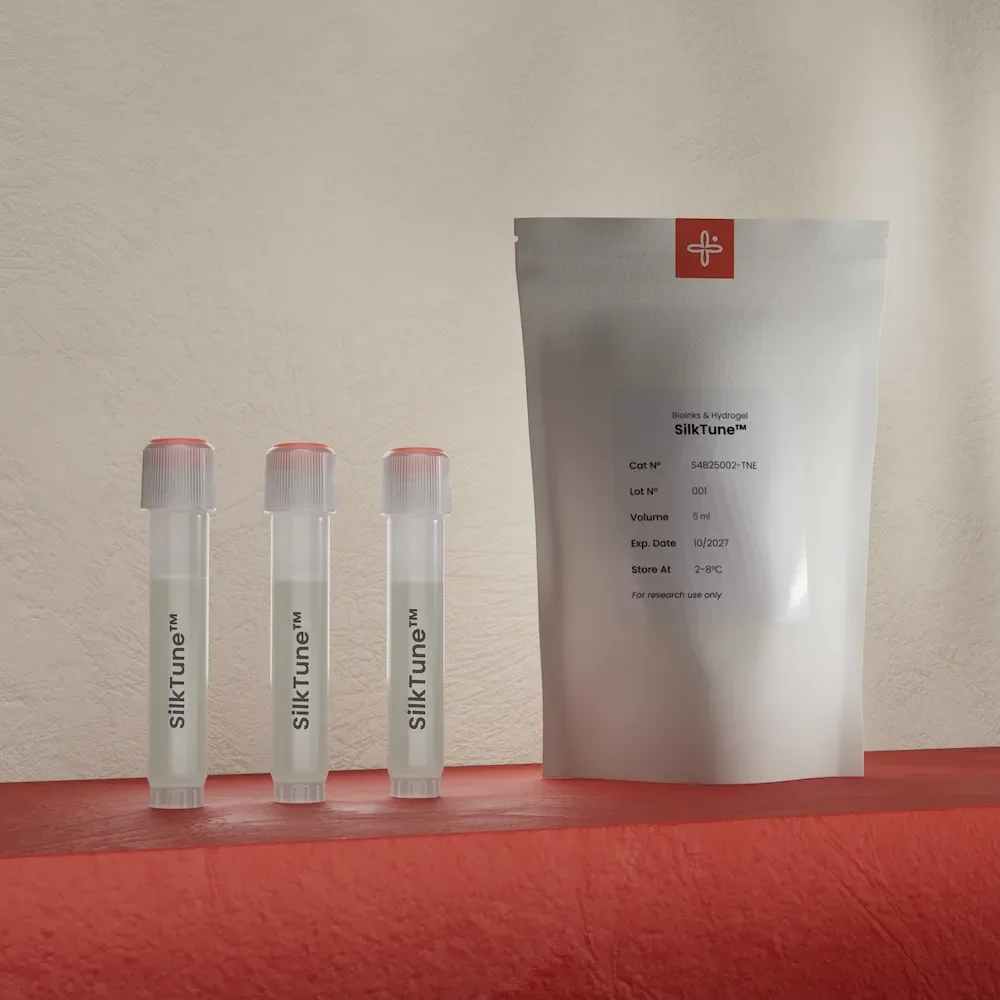
SilkTune™ is a ready-to-use hydrogel created to model mechanical gradients resembling those found across native bone-marrow niches.
Available formulations: 5 ml
SilkTune™ carries modified stiffness, for modelling marrow whose mechanical properties have shifted from normal, and for separating the effect of an altered microenvironment from the intrinsic properties of the cells within it.
Scaffolds
Our scaffolds support the most complex niche biology. Its porous, sponge-like architecture allows cells to migrate and organise. They can be functionalised with matrix proteins found in the native niche and seeded with stromal cells that deposit their own matrix, sequentially or simultaneously. In a perfusion chamber they support dynamic culture and non-destructive harvesting of mature cells, with multiple chambers connectable in parallel.
All formats are optically transparent, permitting high-resolution live imaging of differentiation inside the construct, and bind and present cytokines and extracellular matrix components to cells throughout the 3D structure. All formats allow multiple cell type co-cultures.
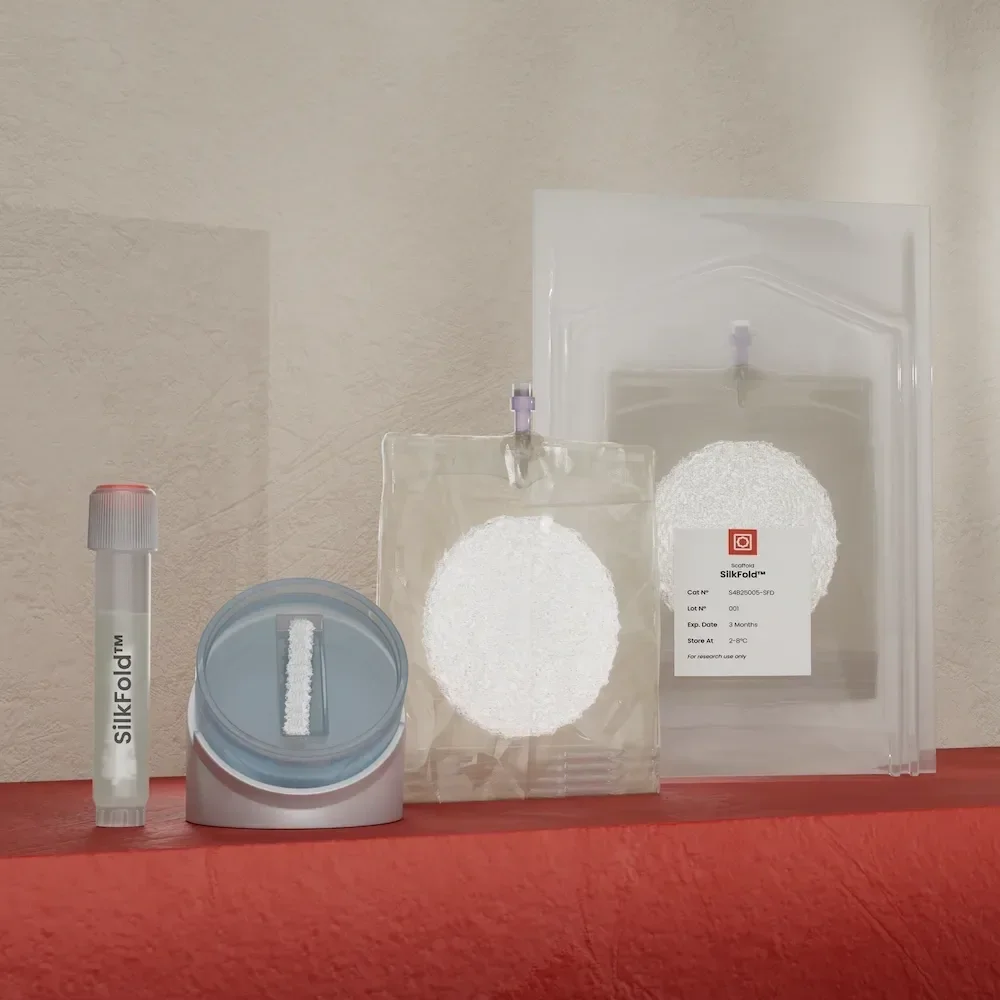
SilkFold™ is a bone marrow biomimetic scaffold compatible with static and perfusion culture.
Available formulations: customizable sizes and format
SilkFold™ is the first silk-based 3D bone marrow model and remains the format that supports the most complex niche biology.
References
Advanced Science. 2024
Bioprinting Soft 3D Models of Hematopoiesis using Natural Silk Fibroin-Based Bioink Efficiently Supports Platelet DifferentiationThrombosis and Haemostasis. 2020
A gold standard protocol for human megakaryocyte culture based on the analysis of 1,500 umbilical cord blood samplesBlood Advances. 2025
In vitro studies of human erythropoiesis using a 3D silk-based bone marrow model that generates erythroblastic islands.Blood Vessel Thromb Hemost. 2025
Dose-dependent effects of eltrombopag iron chelation on platelet formationAmerican Journal of Hematology. 2024
Newly Identified Roles for PIEZ01 Mechanosensor in Controlling Normal Megakaryocyte Devolpement and in Primary MyelofibrosisMethods in Molecular Biology. 2018
Three-Dimensional Tissue Models for Studying Ex Vivo Megakaryocytopoiesis and Platelet ProductionBiomaterials. 2018
Multi-channel silk sponge mimicking bone marrow vascular niche for platelet productionBiomaterials. 2017
Modular flow chamber for engineering bone marrow architecture and function