
Leukocytes in silk-based 3D bone marrow models
Applications
Silk4B’s 3D bone marrow models allow for better survival and preserved functionality of peripheral blood leukocytes.
Home › Applications › Leukopoiesis
Neutrophil preservation and function in in vitro 3D bone marrow
Silk4B’s silk-based 3D bone marrow models have a beneficial effect over leukocytes collected from blood. Neutrophils in our 3D bone marrow show better survival (as seen with fewer annexin positive cells over time) when compared to standard methods of preserving them in pellet form. This is also true of other leukocytes (confidential data of our partners).
Neutrophils in our 3D bone marrow are functional and participate in megakaryocyte emperipolesis increasing platelet production. Furthermore, studies in our 3D bone marrow models using healthy and diseased megakaryocytes and neutrophils from patients with JAK2V617F myeloproliferative neoplasms were able to confirm defective neutrophil clearance via immune checkpoint CD24 as a cause in the disease.
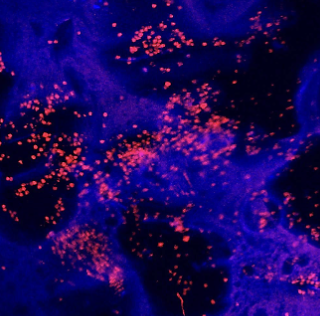
Neutrophils in our silk scaffold
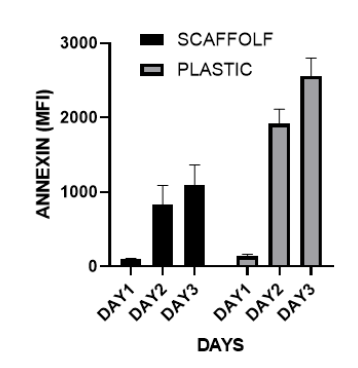
Annexin staining (apoptotic signal) of neutrophils in our scaffold over time is lower compared to standard preservation
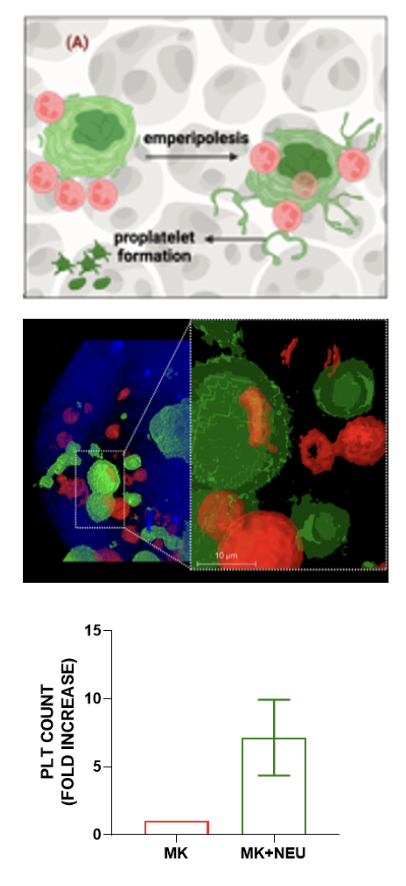
Neutrophil co-culture with megakaryocytes (MK) results in emperipolesis and higher platelet production
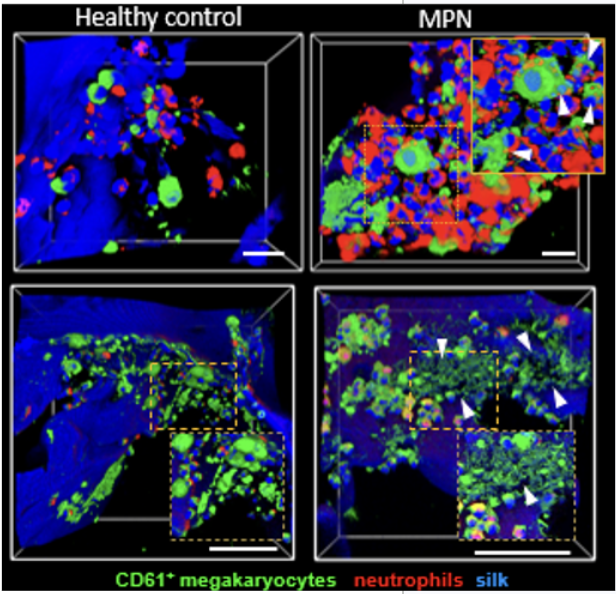
MKs and neutrophils from JAK2V617F patients show significant more emperipolesis and platelet production in our 3D bone marrow models
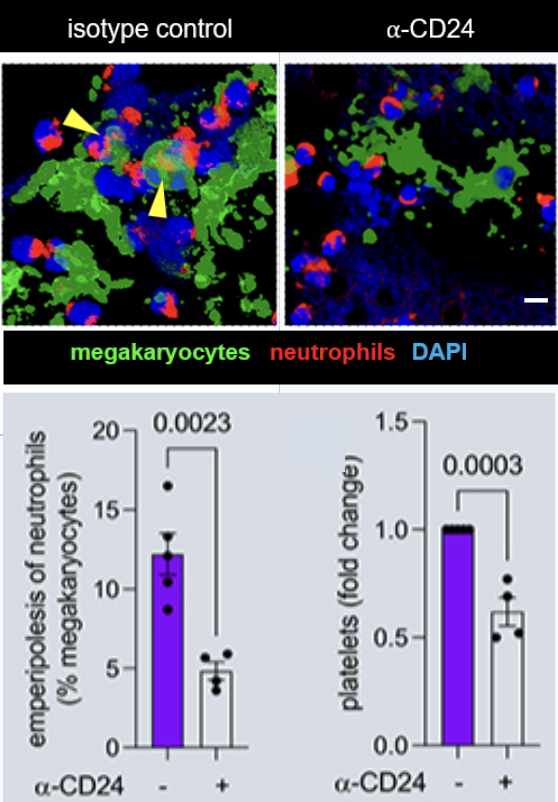
Blocking CD24 with an antibody reduces empiropolesis of neutrophils and correspondingly platelet production. Additional in vivo mouse studies (not shown) implicated CD24 as a causative pathway in pathology.