

Why an in vitro bone marrow model?
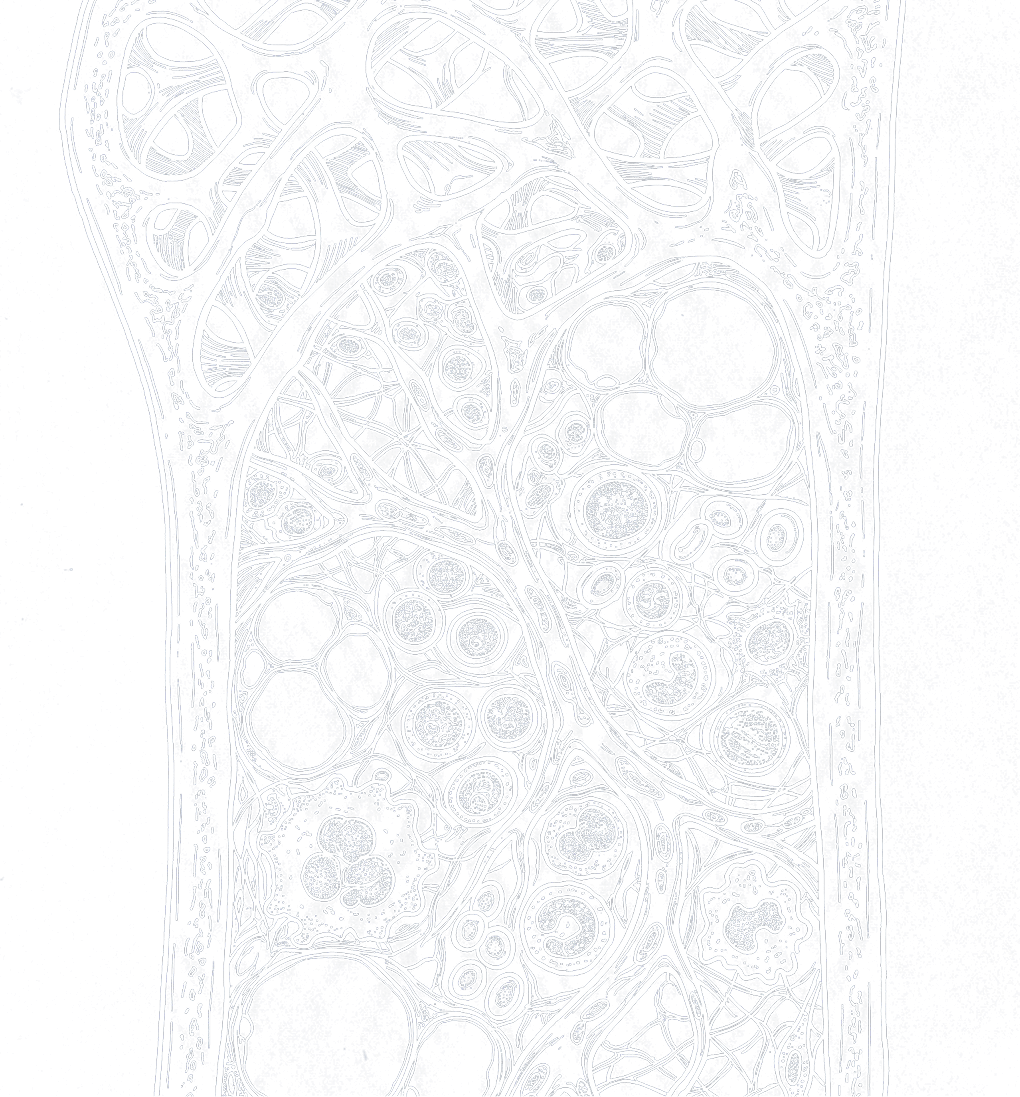
Bone marrow is one of the body's most complex and dynamic organs. Beyond its coordinated cellular interactions and molecular signaling, it depends on the specific mechanical properties of the extracellular matrix that forms the niche. Until now, no in vitro model was able to reproduce it.
The shift toward human-relevant, non-animal methods is now regulatory as well as scientific. The EU's 3R framework under Directive 2010/63/EU and the FDA Modernization Act 2.0 are moving research away from animal testing toward validated in vitro alternatives.
Why now?
Silk4B was founded to meet that need.
Our models reproduce both the biology and the mechanics of the bone marrow niche, giving academic and pharmaceutical researchers a faithful human model where none existed before.
Our story
Can we understand and recreate bone marrow outside the human body?
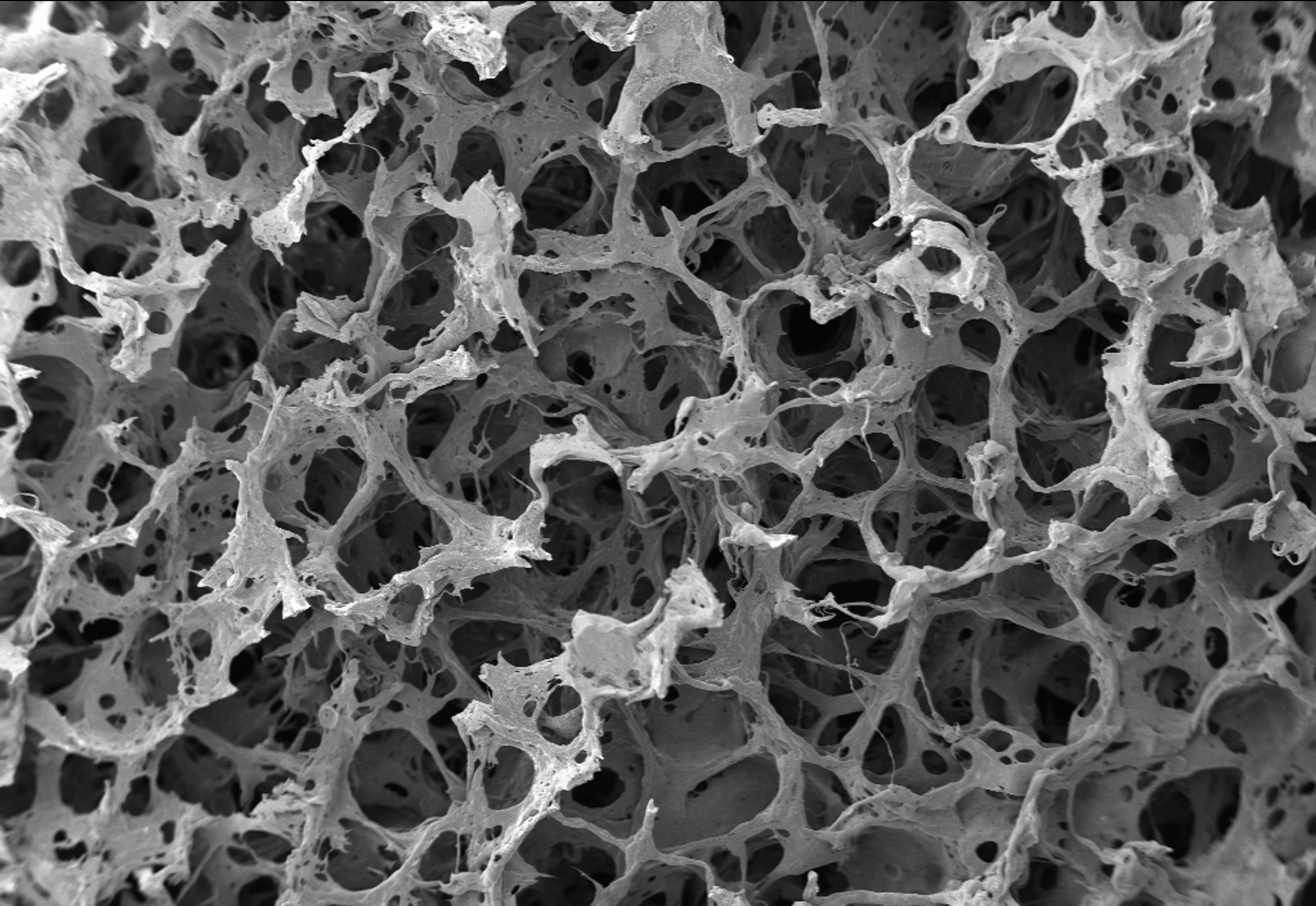
We discovered how the 3D architecture and remarkable softness of bone marrow, one of the most delicate tissues in the human body, play a crucial role in regulating blood cell behavior and maturation. To replicate this environment in vitro, we needed a biomaterial with unique properties.
After 20 years of research in hematopoiesis combined with deep expertise of the founders Prof. Alessandra Balduini, MD and Prof. Christian di Buduo, PhD, silk was identified as an ideal building material for in vitro 3D bone marrow model. Silk fibroin's natural flexibility and tunability made it the perfect match.
In 2015, working between the University of Pavia and Tufts University (Boston), we published Programmable 3D silk bone marrow niche for platelet generation ex vivo and modeling of megakaryopoiesis pathologiesin the peer-reviewed journal Blood: a system that reproduced the physiology of human bone marrow outside the body, modeled the biology behind blood disorders, and generated functional human platelets ex vivo, SilkFold™.
The approach has since evolved into a 3D bioprinted model, SilkInk™, that reproduces the marrow niche with a fidelity earlier methods could not reach. And now we also have manually casted 3D models, SilkThermo™ and SilkTune™.
Today, that work is the Silk4B model: a faithful, functional model of human bone marrow that academic and pharmaceutical researchers use to study disease, test drugs, and advance cell and gene therapies. The same foundation now points toward the next frontier, scalable ex vivo production of blood cells, a developing programme building on a capability the founding science proved from the start.

World-Class Team
The Silk4B
Team of Innovators

Publications
Science behind
the Platform

Services
From Lab
to Impact
We provide scalable and versatile platforms designed to tackle multiple challenges across research and clinical domains. In doing so, two core values guide everything we do: sustainability and scalable innovation.